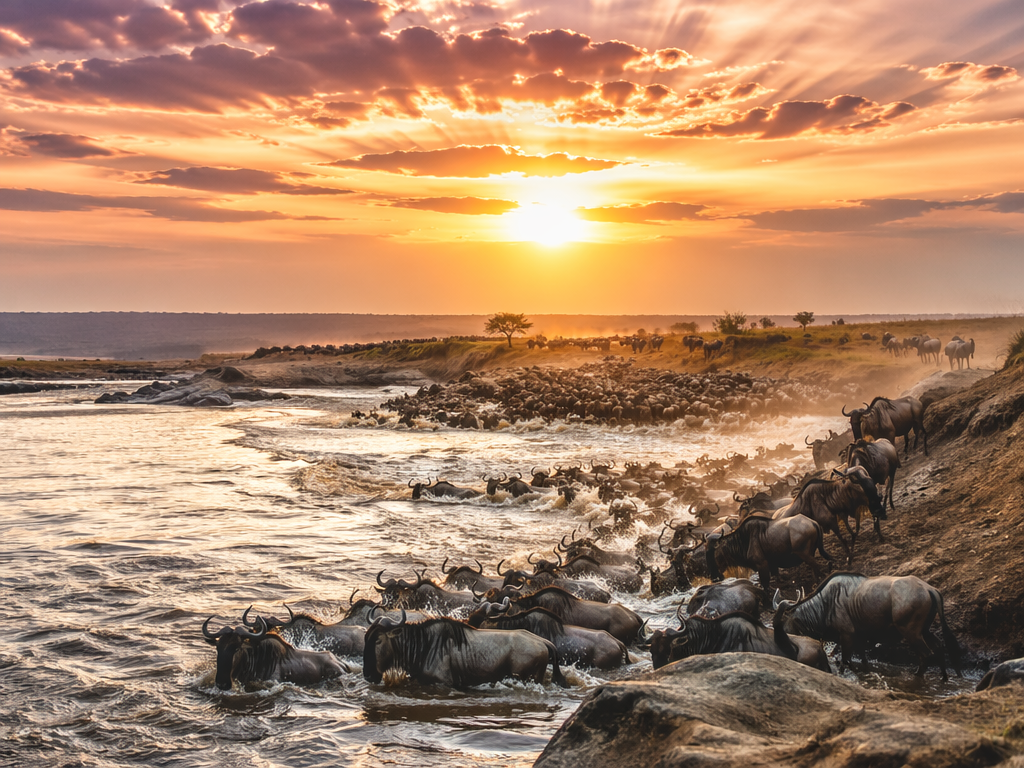
Crossing the Mara River: The Heart-Stopping Moment Every Safari Traveler Dreams About
Imagine standing on the sun-kissed savannah, your heart racing as thousands of wildebeest thunder past you, hooves pounding the earth like a never-ending drumbeat. This isn’t a scene from a nature documentary; it’s the Great Migration, one of the most awe-inspiring spectacles on our planet. Every year, millions of animals embark on a perilous journey across the Serengeti and Maasai Mara, following the rains in search of greener pastures. It’s a sight that many dream of witnessing, but what really goes into planning the perfect Great Migration safari?
What surprised me was how many myths surround this incredible event. For those considering this adventure, it’s crucial to separate fact from fiction. So, let’s explore what a Great Migration safari truly entails, from the best times to go to the pitfalls to avoid.
Myth-Busting the Great Migration
First off, let’s tackle some common misconceptions. Many people think the Great Migration happens at a fixed time, but that’s a myth. While the migration generally follows a cycle between the Serengeti in Tanzania and the Maasai Mara in Kenya, the timing shifts slightly each year. Factors like rainfall patterns and food availability play a huge role in this natural phenomenon. If you’re planning your trip around a specific date, you may be disappointed — the animals are unpredictable, and nature has its own timeline.
Another myth is that you need to spend a fortune to see the migration. While luxury lodges exist, there are plenty of budget-friendly options that still offer a front-row seat to the action. Whether you choose to camp in a mobile tent or stay in a lodge, the experience can be tailored to fit your budget. The key is to do your research and plan wisely.
Your Expert Guide to Planning a Great Migration Safari
Once you’ve debunked those myths, it’s time to dive into the nitty-gritty of planning your safari. Here’s how to ensure you have the experience of a lifetime:
- Choose the Right Time: The migration typically occurs from July to October, but you can witness different phases during the year. For instance, the calving season happens between January and March, where you can see baby wildebeest take their first steps. Each period offers different experiences.
- Pick Your Location: The Serengeti and Maasai Mara are the main stages for the migration. The Serengeti is more expansive and offers a wider range of wildlife experiences, while the Maasai Mara is more accessible and often has larger concentrations of predators. Your choice will depend on what you want to see.
- Book Early: Given the popularity of this event, accommodations can fill up quickly, especially during peak migration months. Booking several months in advance ensures you have your pick of lodges and camps.
- Consider Guided Tours: While self-drive safaris can be thrilling, guided tours often provide deeper insights into the ecosystem. Seasoned guides know the best spots to witness the migration and can share fascinating information about the wildlife.
- Pack Wisely: Lightweight clothing, binoculars, a good camera, and sun protection are essentials. The weather can be unpredictable, so be prepared for both sun and rain.
Avoiding Common Mistakes
In my travels, I’ve seen many others make costly mistakes that could have been avoided. Here are a few lessons learned:
- Don’t Rush: One of the biggest mistakes is trying to cram too much into your itinerary. The migration is best experienced slowly, allowing time to observe and appreciate the wildlife. Take your time during game drives, and don’t be afraid to linger if something interesting catches your eye.
- Overlooking Travel Insurance: Safari adventures can be unpredictable. Ensure you have travel insurance that covers medical evacuation and unexpected cancellations for peace of mind.
- Ignoring the Rules: Respect for the wildlife and their habitat is paramount. Always follow the guidelines set by your guides and national parks. Getting too close or leaving the designated paths can disrupt the animals and endanger yourself.
Best Spots to Witness the Migration
If you’re ready to experience the Great Migration firsthand, here are some prime locations to consider:
- Seronera Valley: This area in the central Serengeti is perfect for spotting wildebeest and zebras during the migration. It’s also known for its high density of predators.
- The Mara River: Known for dramatic crossings, this is where you can witness wildebeest and zebras braving crocodile-infested waters. The sight of them leaping into the river is something you won’t forget.
- Oloololo Gate: On the western edge of the Maasai Mara, this area offers breathtaking views and is often less crowded than other parts of the park.
Final Thoughts on Your Great Migration Adventure
Experiencing the Great Migration safari can be life-changing. It’s not just about seeing the animals; it’s about connecting with nature in a way that few experiences can replicate. Go with an open mind, embrace the unpredictability of nature, and let the rhythms of the animal world captivate you.
Preparing for this adventure is as important as the experience itself. Arm yourself with knowledge, make informed decisions, and soon enough, you’ll find yourself amidst the thundering herd, feeling the very pulse of the African plains.